Define the control zone
- Can the barrier sit below the task without interfering with lift swing or scissor deck extension? Map boom tails, platform overhangs, and turning radii.
- Identify high-conflict zones: dock approaches, trailer staging pockets, and crosswalks between parking and entries.
Surface and footing
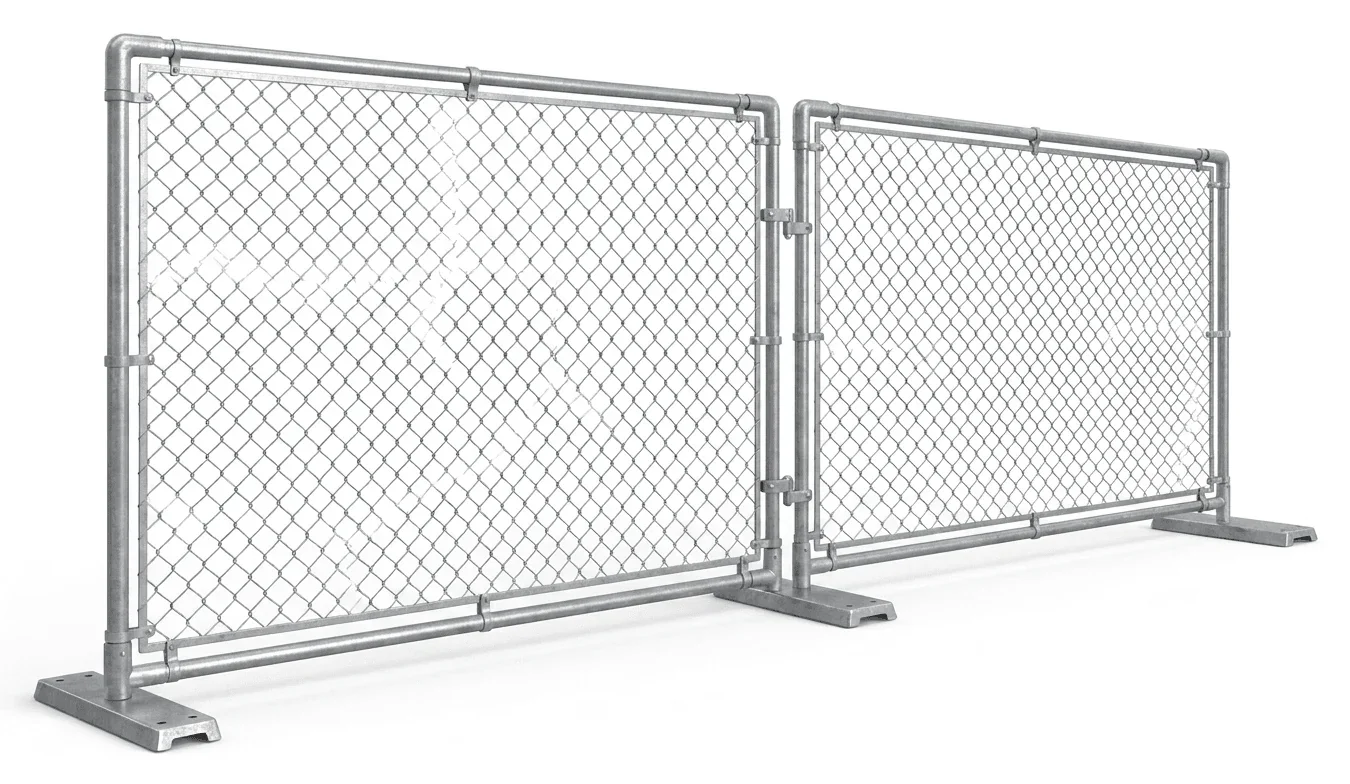
- On interior slabs, panel stands sit predictably, but expansion joints and polished floors can affect skid resistance.
- On compacted aggregate, panel stability depends on level ground and site-stability factors; watch for ruts from repeated forklift passes.
Wind and visibility at open sites
Open corners of industrial parks can be gusty. Choose layouts that reduce sail effect and avoid funneling wind between trailers. - Place barricades to channel pedestrian flow without pushing people into blind truck turns. - Coordinate with /generators-light-towers-rental/ for lighting of gate lines and night shift detours.
Integration with aerial and material handling
- Aerial work above active lanes needs buffer distance. Review platform type and work height at /aerial-lift-rental/, /articulating-boom-lift-rental/, or /telescopic-boom-lift-rental/ to set offsets that fit tail swing and outreach.
- If moving pallets or pipe bundles, confirm /forklift-rental/ or /telehandler-rental/ approach paths before fixing barricade lines.
Seasonal considerations
- Freeze–thaw and steady precipitation can soften subgrade under feet and blocks; re-check plumb and panel tension after storms.
- Snow piles can push panels out of line and narrow egress routes. Plan for plow paths that won’t undermine barricade bases.